FROM MOSSDALE · PAUL CLARKE

Land as a living participant.

We sit in the wood until the birds come back. We grow food together. We gather at the fire as the seasons turn.

At Hensol, learning begins in contact with a place. The land offers the materials, rhythms and encounters from which a community makes its life. This is the starting point of Naturally Smart.

Read Paul’s full paper →

Version 5.4 · 13 October 2026 · PDF

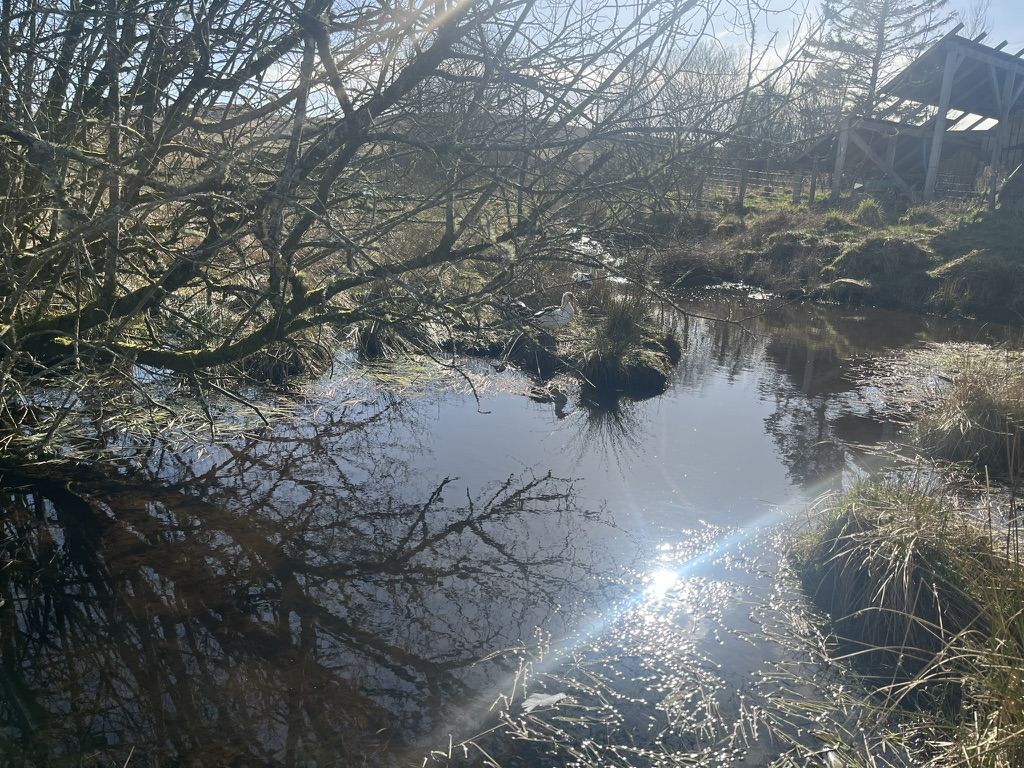
The pond and living landscape at Hensol Wood

BEGIN WHERE YOU ARE

The sitting spot.

Choose a place outdoors where something is alive. Return to it. Sit quietly for twenty minutes, if that is comfortable for you. Let the place go about its business.

There is nothing to achieve and no need to explain what happens. Notice the nearest living thing carrying on with its day. Return another day and begin again.

This is a practice you can take home from a gathering, or begin before you ever visit Mossdale.

HENSOL · A LANDSCAPE OF ECOLOGICAL SIGNIFICANCE

Where wood and wetland meet.

Our place at Hensol sits beside a landscape recognised for its importance to wildlife, within the Galloway and Southern Ayrshire UNESCO Biosphere.

01

A wetland of international importance

Loch Ken and River Dee Marshes is both a Ramsar wetland and a Special Protection Area. Its open water, swamp, fen, grassland and wet woodland support important wintering geese, scarce plants and aquatic invertebrates.

NatureScot Ramsar citation ↗
02

The River Dee marshes

The River Dee (Parton to Crossmichael) SSSI forms part of that protected wetland. Its open-water transition fen and lowland acid grassland support wintering Greenland white-fronted geese, greylag geese and whooper swans, together with an outstanding dragonfly assemblage.

NatureScot River Dee citation ↗
03

Woodhall Loch

Nearby Woodhall Loch is a separate SSSI. Its naturally nutrient-poor waters, fen meadows and transitions from water to wet ground hold diverse plant communities, water beetles and the caddisfly Anabolia brevipennis.

NatureScot Woodhall Loch citation ↗

These connections give the work its setting: water, soil, insects, birds and people sharing a living landscape. Our gatherings begin with attention to that place and care for the lives already here.

Designations describe the named protected sites and their mapped boundaries. Details checked against NatureScot citations on 21 October 2026; the Ramsar citation was amended in September 2025.

THE WORK AT MOSSDALE

Growing. Making.
Belonging.

01

Grow and share

Permaculture learning connects the kitchen garden, polytunnel and table. Care for the earth, care for people and sharing the surplus become things people do together.

Food around the table →
02

Make together

The woodland art room, sauna and meditation pyramid were built by the people who use them, with timber from the forest. Making a meal, a shelter or a story gives people a part in the place.

Meet the practice →
03

Give a place its stories

MossTales uses real places and invented people. Readings lead to conversation about the village and its future. In the first book the land watches; in the second, it listens and keeps what it hears.

Gather around a story →

OTHER WAYS OF LISTENING

Sound, night and other lives.

Bog Symphony & Land of Giants

Bog Symphony turns water measurements and photographs of wet ground into sound. Twelve contributions form four movements: Ground, Water, Light and Weather. The mapping is an artistic way of listening to a place. Land of Giants carries that exploration into the forest.

These are strands of the ongoing work; public sessions will be announced when available.

Dark skies & moths

Looking up at the night sky and looking closely at moths are neighbouring forms of attention. The woodland moth project uses lights, cameras and AI-assisted identification to help people notice who lives here.

AI can suggest an identification; records need checking. It helps people see more, while the encounter remains theirs.

Explore Dark Skies →

THE NATURALLY SMART CARDS

Other lives at the table.

For twenty years, communities have used the cards to talk about their water, food, energy, shelter and people, then to plan. Each group decides what matters in its own place.

Transport includes bird migration and deer runs. Shelter includes nests and rabbit holes. The cards invite people to consider the needs of the land and its other creatures alongside their own.

From attention to action.

Bring what you notice to a real decision. What would the land need from a new building, a field or a water supply? Whose needs have been overlooked? What could you make or change together?

The paper describes people returning, sharing skills and making plans. These are local observations and a developing practice; they are not measured claims about health or wellbeing.

Read the account in Paul’s own words →

AN INVITATION

Begin where you are.

Find a place and return to it. Bring others. Tell its stories. Make something together. Carry what you learn into a decision that cares for the place.

Adapted from Paul Clarke’s Land as a living participant, version 5.4, dated 13 October 2026. Programme details on this website provide current booking information.